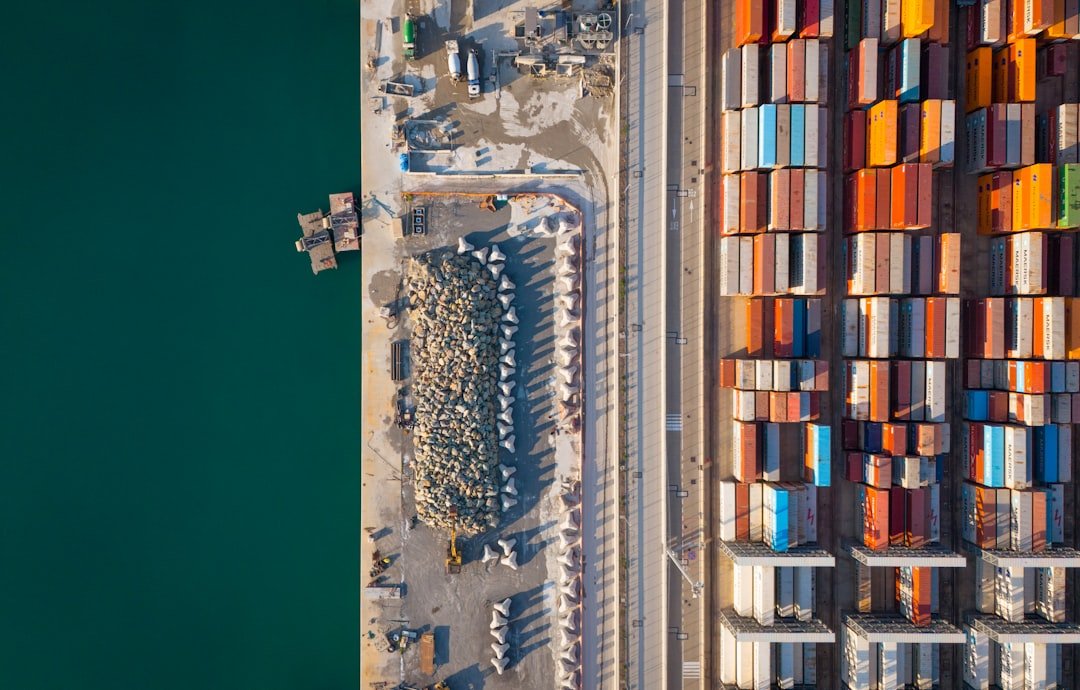
Featured image: Unsplash / Cosmin Andrei Buzamat (representative image)
Gwadar Port is routinely described as a future gateway for regional trade, a $65 billion Chinese-backed bet on Pakistan’s southwestern coast. Roughly 140 kilometres to the west, across the Iran-Pakistan border, Chabahar Port carries a similar pitch for India and Iran. Both are framed by their backers as the shorter route to Afghanistan and Central Asia. Only one of them, however, is actually moving meaningful cargo – and it isn’t Gwadar.
That gap became difficult to ignore this year, after Gwadar’s own port authority put a number on it in an official briefing, and after Islamabad responded with a round of tariff cuts aimed at closing it. Here is what the available data actually says about the rivalry, and what it means for Gwadar’s next phase of development.
The Number Gwadar’s Own Port Authority Put on the Table
In a strategic brief presented on June 16 to Pakistan’s Minister for Planning, Development and Special Initiatives, Gwadar Port Authority chairman Noor Ul Haq Baloch disclosed that the port has handled just 4,789 containers in total since operations began in 2007, against an installed annual handling capacity of 240,000 TEUs (twenty-foot equivalent units), Asia Times reported in July. Three berths and five ship-to-shore cranes are operational, but the port has never secured a main-line liner relationship – meaning none of the major global shipping alliances calls at Gwadar on a regular, scheduled basis.
The same brief put a figure on the investment mismatch behind that shortfall: Pakistan has spent roughly 61.2 billion rupees (about $219.7 million) on public infrastructure at the port since 2007, while the Chinese concession-holder, China Overseas Ports Holding Company, has deployed only around $250 million of a committed $1.2 billion – even as it collects an estimated 91 percent of port revenue under the concession terms. For comparison, the brief noted that Morocco’s Tanger Med port reached 10.2 million TEUs a year within 15 years of opening and drew more than 1,100 export-oriented firms to its free zone; Gwadar’s own Free Zone occupies just 1.2 percent of its 2,323 allocated acres.

Image: Unsplash / Pontus Wellgraf (representative image)
Islamabad’s Answer: Deeper Tariff Cuts
The federal government’s response, announced weeks earlier in May, was to make Gwadar cheaper to use. Container ship berthing fees were cut by 25 percent, international transshipment container charges by 40 percent, and transit cargo charges by as much as 31 percent, while free general cargo storage was extended to a full month, compared with the standard five-day allowance elsewhere, Dawn reported. “Ships bringing transit and transshipment cargo have been given major relief,” Federal Maritime Affairs Minister Junaid Anwar Chaudhry said at the time.
Officials framed the cuts as a bid to attract investors and lift throughput, positioning Gwadar as a competitive alternative to traditional routes at a moment when tensions around the Strait of Hormuz have periodically raised the appeal of ports that sit outside it. The report noted only limited traffic data to gauge early impact, citing four transshipment calls recorded in April – a modest baseline against which any improvement will be measured.
Chabahar’s Head Start
Chabahar, by contrast, has had an operating track record since 2018, when India Ports Global Limited took over terminal operations. India has since deepened its commitment: in May 2024, the two countries signed a 10-year contract worth $120 million, backed by an additional $250 million credit line for related infrastructure. The port’s capacity has grown from 2.5 million to 8.5 million tons of annual handling, with further expansion planned, and it has processed roughly 90,000 containers and 8.4 million tons of cargo to date – including shipments of 2.5 million tons of wheat and 2,000 tons of pulses bound for Afghanistan, according to figures reported by The Express Tribune.

Image: Unsplash / Sergi Ferrete (representative image)
Same Coastline, Different Backers
The two ports sit on the same stretch of the Arabian Sea and pitch nearly identical value propositions – shorter, cheaper access to landlocked Afghanistan and Central Asia – but they are underwritten by rival geopolitical projects. Gwadar anchors the Pakistani end of the China-Pakistan Economic Corridor and China’s wider Belt and Road ambitions, a relationship Beijing has continued to fund even amid thin commercial returns, largely for the long-term strategic value of an Arabian Sea foothold. Chabahar underpins India’s Connect Central Asia policy and, analysts note, dovetails with Washington’s own interest in routes that bypass Pakistan and China’s regional footprint.
That rivalry framing sits somewhat uneasily alongside Gwadar’s other regional diplomacy. Pakistan and Oman are separately moving to formally twin Gwadar with Oman’s Sohar Port as sister ports, alongside new SalamAir flights and Gwadar Free Zone investment talks – a reminder that Gwadar’s competitive position depends as much on the partnerships it can build with Gulf neighbours as on any direct contest with Chabahar.
What Gwadar Is Betting Its Longer-Term Future On
Gwadar’s answer to a thin operating record so far has largely been to point further down the calendar. The Gwadar Smart Port City Master Plan, which runs from 2017 to 2050 and continues to guide the Gwadar Development Authority’s land-use decisions, projects the city’s population reaching 2 million, its economy expanding to $30 billion, and roughly 1.2 million jobs and 250,000 households created by mid-century, according to the plan published by the GDA. That vision unfolds in four phases: core infrastructure first, then residential and commercial zones, tourism facilities, and finally education and research institutions meant to anchor a knowledge-based economy. It also anticipates nine additional multipurpose berths and continued build-out of the 19-kilometre East Bay Expressway linking the port to the Makran Coastal Highway.
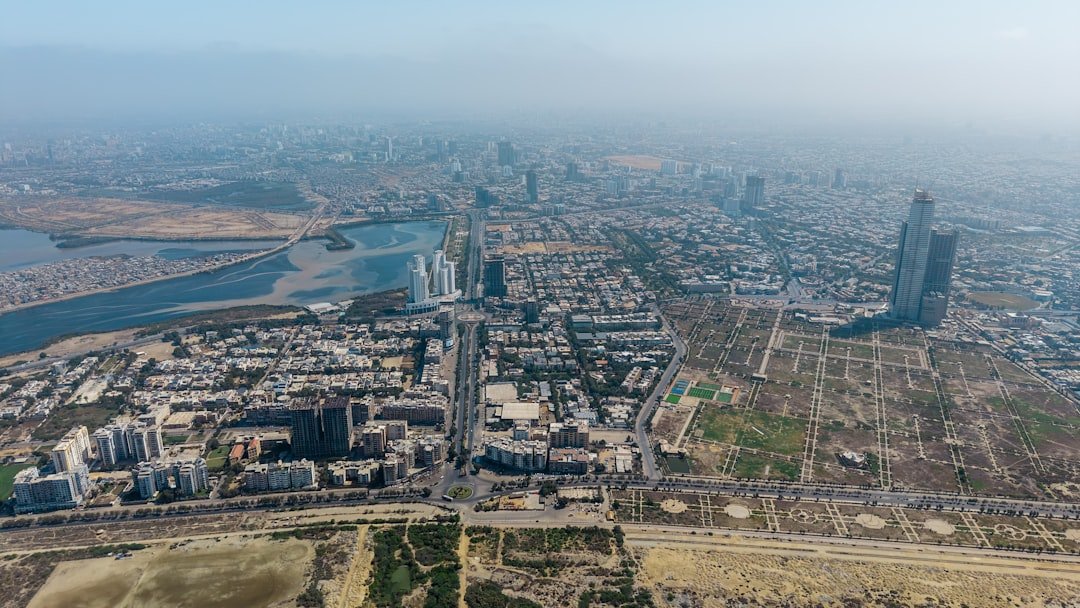
Image: Unsplash / Tahamie Farooqui (representative image)
Some of that broader vision is already visible on the ground: a recent CPEC review proposed expanding the city’s Pak-China Friendship Hospital to 300 beds and building a new fish harbor at West Bay, while a Rs2.44 billion fishermen’s housing scheme is already creating close to 3,000 residential plots. These are the kinds of social-infrastructure commitments the master plan calls for, even as the port’s cargo numbers lag far behind its handling capacity.
The Gap Between Vision and Volume
None of this makes Gwadar and Chabahar a settled contest. Chabahar’s throughput remains modest by the standards of major regional hubs, and its expansion depends on India sustaining investment despite US sanctions pressure on dealings with Iran. Gwadar, for its part, has a deep-water berth, Chinese financing commitments and a 2050 master plan that dwarfs anything currently proposed for its rival. What it has lacked, on its own port authority’s own accounting, is the scheduled shipping traffic that would put that infrastructure to use.
Whether this year’s tariff cuts, the slow build-out of Free Zone Phase II, and new Gulf partnerships such as the Sohar sister-port arrangement are enough to convert Gwadar’s installed capacity into actual liner calls – before Chabahar or another regional port locks in a first-mover advantage – is the question officials on both sides of the CPEC project are now being asked to answer with results rather than master-plan projections.
Frequently Asked Questions
How many containers has Gwadar Port handled since it opened in 2007?
According to a strategic brief presented by the Gwadar Port Authority to Pakistan’s planning minister on June 16, 2026, the port has handled a total of 4,789 containers since operations began in 2007, against an installed annual capacity of 240,000 TEUs.
Why did Pakistan cut tariffs at Gwadar Port in 2026?
The federal government cut container berthing fees by 25 percent, transshipment charges by 40 percent and transit cargo charges by up to 31 percent in May 2026, aiming to attract shipping lines and boost cargo throughput amid persistently low traffic volumes.
How does Chabahar Port compare to Gwadar in cargo volume?
Chabahar has processed roughly 90,000 containers and 8.4 million tons of cargo since India Ports Global Limited began operating it in 2018, including significant wheat and pulses shipments to Afghanistan – volumes well ahead of Gwadar’s recorded container traffic over a comparable period.
What is the Gwadar Smart Port City Master Plan?
It is the Gwadar Development Authority’s 2017-2050 development framework, which targets a city population of 2 million, a $30 billion local economy, and about 1.2 million jobs, alongside phased infrastructure, residential, tourism and education development.
Are Gwadar and Chabahar direct competitors?
They are often described that way because both offer routes to Afghanistan and Central Asia and are backed by rival geopolitical blocs – China for Gwadar, India for Chabahar – but analysts note the two can also be viewed as serving overlapping rather than identical trade corridors, with Gwadar also pursuing separate cooperation, rather than competition, with ports such as Oman’s Sohar.