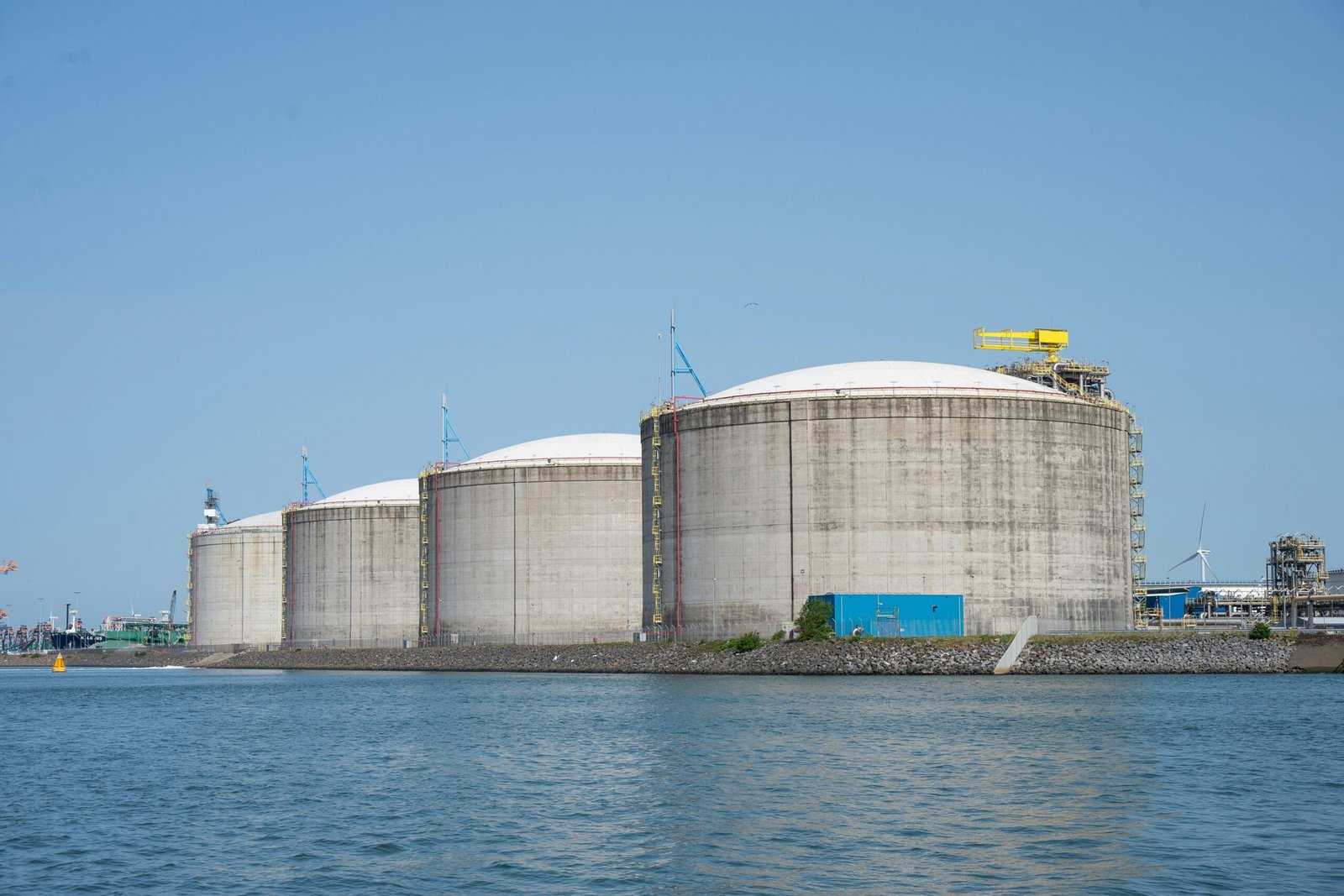
Balochistan’s provincial cabinet has approved a $14 billion gas terminal project for Gwadar backed by Turkmenistan investment, adding a new and largely unremarked piece to the port city’s crowded infrastructure pipeline. The decision, taken on July 30, 2026, at a cabinet meeting chaired by Chief Minister Mir Sarfraz Bugti, commits the province to a facility described in official statements as the “Tri-State Gas Terminal,” intended to supply natural gas to four of Balochistan’s southern and western districts: Gwadar, Panjgur, Chagai, and Washuk.
What the Cabinet Approved
According to reporting by Dawn and Profit by Pakistan Today, the gas terminal was one item on a 26-point cabinet agenda that mixed large infrastructure decisions with routine provincial business. Alongside the terminal, the same meeting cleared Rs858 million for security arrangements covering seven South Balochistan Package development projects, approved a Rs19 billion Sibi-Harnai road scheme on an 80:20 federal-provincial cost-sharing basis, granted university status to Tameer-i-Nau College, approved scholarships for 300 children under Phase III of the Workers Welfare Board program, and endorsed the merger of the Levies Force into the regular police, alongside restoration of Safe City camera infrastructure.

On the gas terminal specifically, the cabinet directed the Senior Member of the Board of Revenue to “ensure that the province’s rights were fully protected in the project,” provincial ministers Mir Zahoor Buledi and Mir Ziaullah Langove told reporters afterward. Beyond confirming the $14 billion figure, the four-district supply area, and Turkmenistan’s role as an investment partner, neither official disclosed a construction timeline, terminal capacity, storage volume, or financing breakdown. Public reporting so far has also not explained what specifically the “tri-state” label refers to — whether it describes a three-party arrangement involving Turkmenistan, Pakistan, and a third partner, or reflects some other structuring of the project.
Turkmenistan’s Long-Running Push for a Gwadar Foothold
The July 2026 approval is not the first sign of Turkmenistan’s interest in Gwadar. Ashgabat has spent several years positioning itself for port access on Pakistan’s coast, driven by the country’s status as a major gas producer that currently depends heavily on transit routes through Russia, Iran, and China to reach buyers. Analysis published by the Bloomsbury Intelligence and Security Institute (BISI) has described the appeal of Gwadar to Turkmenistan in blunt terms: a maritime outlet would give the country “streamlined maritime access to European, African and Middle East markets” and open the door to new LNG buyers such as Vietnam, reducing its reliance on a small circle of existing customers and transit partners.
Those discussions have proceeded through Pakistan’s Special Investment Facilitation Council, with a committee formed at one stage to review a draft agreement between the ports of Gwadar and Turkmenbashi. If it goes ahead, Turkmenistan would become the first Central Asian country with a formal port arrangement on Pakistani soil — a milestone that has been discussed for at least two years before this month’s provincial cabinet decision translated the idea into a specific, funded project with named beneficiary districts. Analysts have also flagged that the absence of operational LNG import infrastructure in Pakistan, along with Balochistan’s persistent security concerns, are likely to slow how quickly any economic benefit materializes on the ground.

A Recurring Theme: Provincial Oversight of Big-Ticket Projects
The cabinet’s explicit instruction to protect Balochistan’s rights in the gas terminal deal echoes a wider pattern in how the province has approached major projects tied to outside investment. It comes weeks after Balochistan political leaders publicly warned against proposals floated in Islamabad to place Gwadar under direct federal administration, arguing that decisions about the port city’s future are too often made without meaningful provincial input. A $14 billion project bringing a foreign government-linked investor into Balochistan’s energy sector is precisely the kind of arrangement that has previously triggered demands from provincial lawmakers for a guaranteed local share of the benefits, rather than a repeat of past CPEC-era projects that residents say delivered limited local employment or revenue.
Another Piece of Gwadar’s Energy Landscape
The gas terminal adds to an already complicated picture of how Gwadar and its surrounding districts are powered and supplied. The city’s electricity, as this site has reported, comes almost entirely from cross-border imports from Iran through the Pishin and Polan interconnections — an arrangement that has produced hundreds of hours of blackouts in recent years and now faces fresh risk from regional tensions. A natural gas supply project for Gwadar, Panjgur, Chagai, and Washuk is a separate undertaking from that electricity question, but it reflects the same underlying reality: basic energy infrastructure across Gwadar and the wider Makran belt remains thin, and both provincial and federal governments are now pursuing multiple, largely uncoordinated fixes at once, from backup power plants to new gas import terminals financed by different foreign partners.

The project also sits alongside the broader push under CPEC 2.0’s commerce-focused phase to diversify what flows through Gwadar beyond Chinese-financed infrastructure, bringing in Gulf, Central Asian, and other regional investors. Whether the Tri-State Gas Terminal counts formally as a CPEC project, a bilateral Pakistan-Turkmenistan initiative, or a standalone Balochistan government undertaking has not been clarified in any of the official statements released so far.
What Remains Unclear
Several basic facts about the project have not yet been made public. Officials have not said when construction might begin, what capacity the terminal would handle, how the $14 billion figure breaks down between infrastructure, land, and long-term supply contracts, or what portion of the financing Turkmenistan is expected to provide directly. There has also been no public statement yet from Turkmenistan’s government confirming the details announced by the Balochistan cabinet. Given the multi-year timeline that has typically accompanied similar cross-border energy proposals for Gwadar, residents of the four named districts are unlikely to see gas flowing from the project in the near term.
Frequently Asked Questions
What is the Tri-State Gas Terminal approved for Gwadar?
It is a $14 billion gas terminal project approved by Balochistan’s cabinet on July 30, 2026, intended to supply natural gas to the districts of Gwadar, Panjgur, Chagai, and Washuk, with investment involvement from Turkmenistan.
Why is Turkmenistan investing in a Gwadar gas project?
Turkmenistan, a major gas producer, has for several years sought maritime access through Gwadar to diversify its export routes beyond existing transit through Russia, Iran, and China, and to reach new markets in Europe, Africa, the Middle East, and Asia.
When will the gas terminal be built?
No construction timeline has been announced. Officials confirmed the project’s approval and investment figure but have not released details on capacity, financing structure, or expected completion.
Is this project connected to Gwadar’s electricity shortages?
Not directly. Gwadar’s chronic power shortages stem from its dependence on electricity imports from Iran, a separate issue from this gas supply project. Both reflect the broader gap in Gwadar’s basic energy infrastructure.
Does this project fall under CPEC?
That has not been officially clarified. The terminal has been described in provincial cabinet statements as a Turkmenistan-backed investment rather than explicitly as a CPEC project, though it aligns with the broader push to diversify investment in Gwadar under CPEC 2.0.