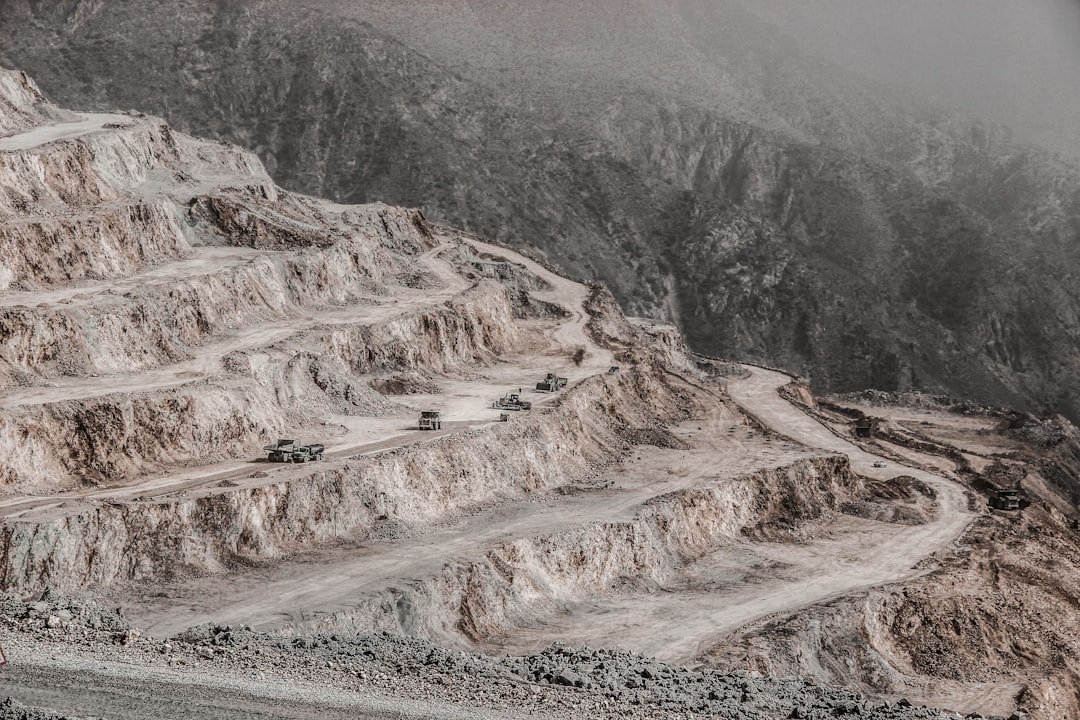
Featured image: Unsplash / omid roshan (representative image)
Nearly a thousand kilometres northwest of Gwadar, in the arid hills of Chagai district near the Iranian and Afghan borders, a mining project with a bigger price tag than the port city’s own master plan is finally moving toward production. Reko Diq, one of the world’s largest untapped copper-gold deposits, is now backed by billions of dollars in fresh financing and a construction timeline aiming for first output in 2028 – a milestone that, if it holds, would make it one of the largest single foreign investments in Balochistan’s history.
The project has spent most of the past 15 years as a cautionary tale rather than a success story: a rejected mining lease, a $5.97 billion international arbitration award against Pakistan, and years of stalled talks. What has changed since a 2022 reconstitution agreement, and what it could mean for a province whose mineral wealth has rarely translated into local prosperity, is now coming into sharper focus.
What Reko Diq Actually Is
Reko Diq sits in the Tethyan magmatic belt, a copper-gold-rich geological arc that runs from Iran through Pakistan into the Kirthar range. Geological studies put the deposit at roughly 5.9 billion tonnes of ore, with grades low by global standards – around 0.4 to 0.5 percent copper – but compensated for by sheer scale and a substantial associated gold content, estimated at more than 41 million ounces.
A 2025 feasibility update valued the resource at more than $60 billion at prevailing prices, split roughly $54 billion in gold and $6 billion in copper. Operator Barrick Mining Corporation has separately projected the project could generate around $74 billion in free cash flow over a 37-year mine life, based on consensus long-term price forecasts. Once fully built out, Reko Diq is expected to rank among the world’s five largest copper mines.
From a $6 Billion Legal Dispute to a Fresh Alliance
Reko Diq’s modern history begins with Tethyan Copper Company, a joint venture originally between Barrick and Chile’s Antofagasta, which explored the site for more than a decade. When Balochistan rejected the company’s 2011 mining lease application, Tethyan took Pakistan to international arbitration. The Islamabad-based World Bank tribunal, ICSID, ruled against Pakistan in 2019 and awarded Tethyan $5.97 billion in damages – a sum that, left unresolved, threatened Pakistan’s credit standing and foreign reserves.
Islamabad avoided that outcome by negotiating a settlement instead. Under a 2022 reconstitution agreement, Pakistan resolved the arbitration dispute and restructured Reko Diq’s ownership: Barrick retained a 50 percent stake and became sole operator, while the remaining 50 percent was split between the federal government, the Balochistan provincial government and Pakistani state-owned enterprises. The arrangement gave Balochistan a direct equity stake in a project developed on its own soil – a structure provincial officials have pointed to as a partial answer to long-standing complaints that the province’s mineral wealth has chiefly benefited outsiders.
Financing a Multi-Billion-Dollar Mine
Building Reko Diq is expensive even by the standards of major mining projects. Phase one construction – the initial processing capacity of roughly 45 million tonnes of ore a year – carries a capital cost estimated at around $5.5 to $5.6 billion, excluding financing costs and inflation. A planned phase two, which would roughly double processing capacity to about 90 million tonnes a year by the early 2030s, is expected to add a further $3 to $3.5 billion.
International development lenders have stepped in to help cover that bill. The International Finance Corporation, the World Bank’s private-sector arm, disbursed $300 million in April 2025 and released a further $700 million the following June. The Asian Development Bank has separately approved a $410 million package, including roughly $300 million in loans to Barrick and a $110 million credit guarantee tied to the Balochistan government’s equity contribution. Barrick has also said it is pursuing up to $3 billion in additional limited-recourse project financing, with the remainder to come from shareholder contributions. Saudi Arabia’s state-backed Manara Minerals has separately been reported to be exploring a stake in the project, part of a broader Gulf push into global critical-minerals supply chains.
Timeline: Construction Now, Ore by 2028
Barrick chief executive Mark Bristow has said the project’s starter operation is on track for completion around 2028 to 2029, with phase one expected to produce roughly 200,000 tonnes of copper concentrate and 250,000 ounces of gold annually once ramped up. Phase two, targeted for the mid-2030s, would roughly double that output. Barrick has said it does not intend to dilute its own equity position as financing is finalised, even as it courts additional strategic investors for the government side of the ownership structure.
Those timelines have slipped before – the project was originally expected to begin producing years earlier – and mining megaprojects of this scale are notoriously prone to further delay as financing, engineering and logistics are finalised in a remote, arid part of Balochistan with limited existing infrastructure.
What It Could Mean for Balochistan
Construction is expected to employ up to 7,500 workers at its peak, with the operating mine sustaining an estimated 4,000 long-term jobs over its projected lifespan of well over three decades. Balochistan’s provincial government has already begun receiving advance payments tied to its equity stake, and officials have cited the project as a potential template for how the province could capture more value from future mineral development – part of a wider push around Balochistan’s copper and gold-rich mineral corridor, alongside CPEC-linked infrastructure investment concentrated further south around Gwadar.
Skeptics note that resource projects of Reko Diq’s size have a mixed record of translating headline investment figures into durable local development, and that security conditions in parts of Balochistan add real operational risk that mining companies elsewhere in the world do not have to plan around. Much like the calculus that keeps foreign capital committed to Gwadar Port despite thin near-term returns, Reko Diq’s backers are betting on a long horizon: a 37-year mine life against which billions in upfront construction costs are meant to pay off gradually, not immediately.
The Bigger Picture
Reko Diq is not a CPEC project in the formal sense – its lead investor is Canadian, not Chinese, and its financing runs through Western and Gulf development institutions rather than Beijing. But it sits squarely within the same broader story that has defined Balochistan’s last decade: a resource-rich, historically underdeveloped province being asked to host enormous, capital-intensive infrastructure whose benefits are meant to arrive on a timeline measured in decades rather than years. Whether Reko Diq’s 2028 target holds, and whether its jobs and provincial royalties reach the communities nearest the mine, will be one of the clearer tests of whether that pattern is starting to change.
Frequently Asked Questions
Where is Reko Diq and who owns it?
Reko Diq is a copper-gold deposit in Chagai district, Balochistan, near Pakistan’s borders with Iran and Afghanistan. Following a 2022 reconstitution agreement, Canada’s Barrick Mining Corporation holds a 50 percent stake and operates the project, while the remaining 50 percent is held jointly by Pakistan’s federal government, the Balochistan provincial government and state-owned enterprises.
When will Reko Diq start producing copper and gold?
Barrick has targeted first production from the initial phase around 2028, with full completion of the starter operation expected by 2029. A second phase, roughly doubling processing capacity, is planned for the mid-2030s.
How is the project being financed?
Financing combines shareholder contributions with development-lender support, including $1 billion disbursed by the International Finance Corporation in 2025, a $410 million Asian Development Bank package, and up to $3 billion in additional project financing Barrick is pursuing. Total phase one capital costs are estimated at roughly $5.5 to $5.6 billion.
How much is Reko Diq worth?
A 2025 feasibility study valued the resource at more than $60 billion at prevailing metal prices – about $54 billion in gold and $6 billion in copper. Barrick has projected the project could generate roughly $74 billion in free cash flow over its 37-year mine life, based on long-term consensus price forecasts.
How did the dispute between Pakistan and Tethyan Copper Company get resolved?
After Balochistan rejected Tethyan Copper Company’s 2011 mining lease application, an ICSID tribunal awarded the company $5.97 billion in damages in 2019. Pakistan avoided paying that award by negotiating a 2022 reconstitution agreement that restored Barrick’s operating role and restructured ownership to include direct federal and Balochistan government equity stakes.
Sources
- Khaleej Times: “Pakistan: Production at the world’s largest untapped copper, gold mine expected to start in 2028”
- MINING.com: “Barrick’s Reko Diq project to generate $74bn over 37 years”
- Reko Diq Mine – background and history
- White & Case: Pakistan reconstitution of Reko Diq project and resolution of US$11 billion dispute