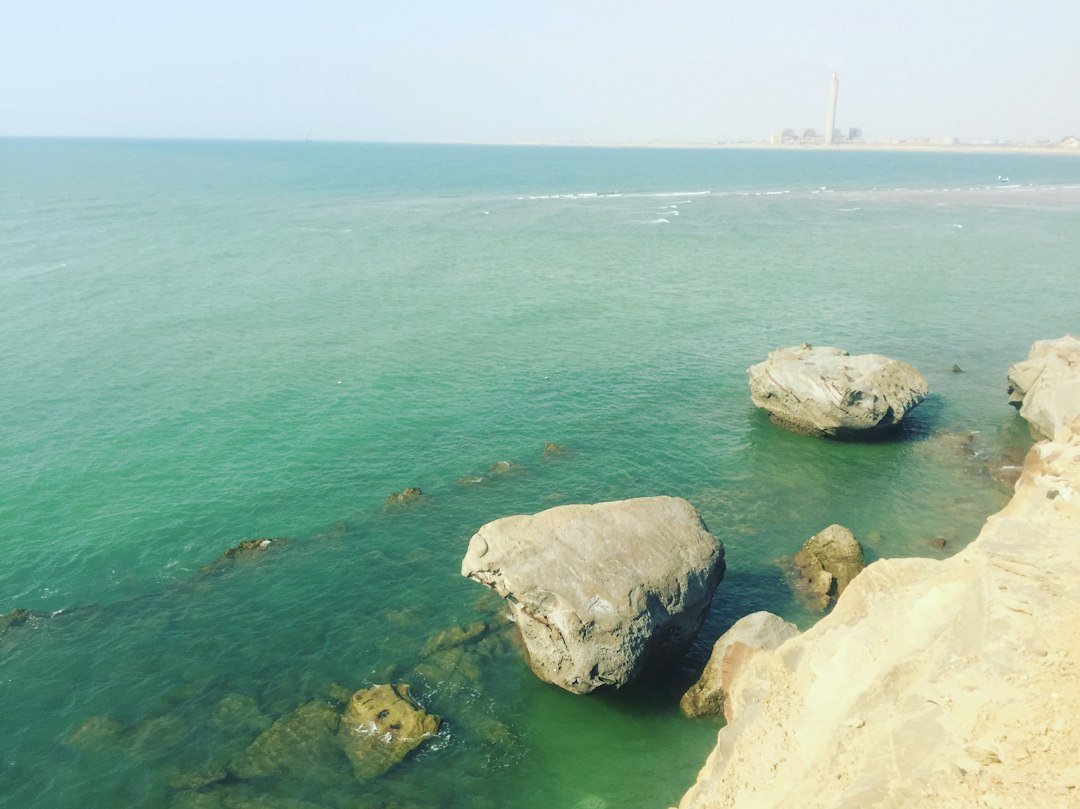
Featured image: Unsplash / Muhammad Abdullah (representative image)
Four employees of Pakistan’s National Logistics Cell (NLC) were shot dead in Gwadar district on the night of September 12-13, 2026, when unidentified gunmen ambushed their vehicle near Border Post No. 250, roughly 60 kilometres from Jiwani and close to the Pakistan-Iran border. Police said the attackers, riding motorcycles, opened fire on the NLC pickup, set it ablaze, and fled after reportedly taking a large sum of cash the employees were carrying.
The killings add a grim, specific data point to a year in which Balochistan has recorded a sharp rise in attacks on state-linked personnel and infrastructure, even as Gwadar’s port and CPEC-linked development projects continue to draw national and international attention. Here is what is known, what remains disputed, and why the incident matters for a district central to Pakistan’s China-Pakistan Economic Corridor ambitions.
What Happened at Border Post 250
According to police accounts reported by Dawn and other Pakistani outlets, the attack took place late on September 12 or in the early hours of September 13, near a remote border checkpoint roughly 60 kilometres from Jiwani tehsil, the westernmost administrative subdivision of Gwadar district, which borders Iran’s Sistan-Baluchestan province. Motorcycle-borne gunmen intercepted an NLC pickup vehicle, opened fire on it, and set it on fire, leaving it “completely destroyed,” police said. A motorcycle was recovered at the scene after the attackers fled.

The four men killed were identified as Ghulam Mustafa, 24, of Layyah in Punjab; Sanam Masih, 34, of Sheikhupura; Kanwal Shehzad, 36, of Quetta; and Danish Iqbal, 26, of Karak in Khyber Pakhtunkhwa – a roster that underlines how NLC’s Gwadar-area operations draw workers from across Pakistan’s provinces, not only Balochistan. Police in Gwadar confirmed an investigation had been opened, though as of this writing no arrests have been announced.
Two Competing Accounts of Why It Happened
Initial police and press reporting framed the attack as a robbery: motorcycle-borne gunmen who killed four men and made off with cash, with the motive “not immediately known” beyond the apparent theft. That account, drawn from Dawn and Daily Independent reporting in the attack’s immediate aftermath, treats the killings as opportunistic criminal violence rather than a politically motivated strike.
A separate account has since emerged from the Balochistan Liberation Army (BLA), the separatist militant group responsible for a large share of the province’s attacks on state and security-linked targets this year. In a statement covering a cluster of operations across Balochistan on September 14, the group claimed an “intelligence operation” in Jiwani that it said killed four people it described as military or intelligence-linked individuals – a casualty count and location that align with the Border Post 250 killings, though the group’s characterization of the victims differs sharply from the robbery narrative given by police. Gwadar Post has not independently verified the BLA’s account, and NLC – a federally run logistics and construction organization historically linked to the Pakistan Army’s Corps of Engineers – had not issued its own public statement on the incident as of publication. Readers should treat the BLA’s claim as unverified, not a confirmed fact.
Part of a Wider Escalation
Whatever the specific motive behind the Border Post 250 killings, they land amid a documented surge in Balochistan violence in 2026. Independent reporting has tracked the BLA claiming responsibility for dozens of operations against Pakistani security personnel across the province in recent months, including attacks in Pasni, within Gwadar district itself, alongside strikes in Mastung, Turbat, Chagai and elsewhere. A separate escalation has also spread into previously quieter Pashtun-majority districts, prompting Islamabad to appoint a new national counter-terrorism coordinator in early September and drawing a public acknowledgment from Balochistan’s chief minister that the pace of killings in the province has become “deeply disturbing.”
NLC itself has periodically operated in higher-risk parts of Balochistan given its role building and maintaining the province’s road network, including sections of the Makran Coastal Highway that link Gwadar to the rest of the country. Its workforce, largely drawn from outside the immediate area and often moving along remote stretches of highway near the Iran border, sits at an intersection of exactly the risk factors – isolated terrain, cash-carrying logistics runs, and proximity to an unmonitored international frontier – that security analysts have long flagged as vulnerabilities for CPEC-linked operations in the province.
What It Means for Gwadar’s Development Narrative
The attack does not sit in isolation from the string of development stories Gwadar Post has covered from the city in recent weeks. Beijing’s continued financial commitment to Gwadar Port despite thin commercial returns and Barrick’s multi-billion-dollar buildout of the Reko Diq mine both rest on an implicit bet that Balochistan’s security situation will not derail decades-long investment timelines. Incidents like the Border Post 250 killings are precisely the kind of episodic violence that project backers on all sides – Chinese, Pakistani federal, and Gulf co-investors in ports from Oman’s Sohar to Gwadar itself – must weigh against the province’s long-run development potential.
For residents of Jiwani and the wider Gwadar coastline, the immediate concern is more direct: a fatal attack on a state logistics crew, on a road many locals and workers use daily, in a district where security forces, NLC road crews, and militant fighters now operate in close and sometimes lethal proximity.

What Happens Next
Gwadar police say the investigation into the September 12-13 killings remains open, with no arrests publicly announced as of this writing. Neither NLC nor federal authorities have issued a detailed public statement addressing the BLA’s competing claim about the victims’ identities. Gwadar Post will update this report as police, NLC, or federal officials release further details, and as it becomes clear whether any group’s claim of responsibility is formally substantiated.
Frequently Asked Questions
What happened near Gwadar’s Pakistan-Iran border on September 12, 2026?
Four employees of Pakistan’s National Logistics Cell were killed when motorcycle-borne gunmen opened fire on their pickup vehicle and set it ablaze near Border Post No. 250, about 60 kilometres from Jiwani in Gwadar district. Police said the attackers fled after reportedly taking cash from the vehicle.
Who were the victims of the Gwadar NLC attack?
Police identified the four men killed as Ghulam Mustafa, 24, of Layyah; Sanam Masih, 34, of Sheikhupura; Kanwal Shehzad, 36, of Quetta; and Danish Iqbal, 26, of Karak in Khyber Pakhtunkhwa.
Did anyone claim responsibility for the attack?
Police initially described the incident as a robbery-motivated attack, with no group claiming it immediately. The Balochistan Liberation Army later described a Jiwani “intelligence operation” resulting in four deaths in a September 14 statement covering multiple operations, but its characterization of the victims as military or intelligence-linked has not been independently verified and differs from the robbery account given by police.
Is this attack connected to CPEC or Gwadar Port?
NLC is a federal logistics and construction organization that builds and maintains road infrastructure in Balochistan, including highway links serving Gwadar district, but the attack occurred at a remote border post rather than at the port itself. There is no confirmed link between this incident and Gwadar Port operations specifically.
How does this fit into Balochistan’s broader security situation in 2026?
The attack occurred amid a documented rise in militant activity across Balochistan in 2026, including a spread of violence into previously quieter districts and the appointment of a new national counter-terrorism coordinator in early September. Multiple armed groups, including the Balochistan Liberation Army, have claimed dozens of operations against Pakistani security and state-linked personnel across the province this year.
Sources
- Dawn: “Four National Logistics Cell employees martyred near Pak-Iran border in Gwadar”
- Daily Independent: “Four NLC Employees Killed in Armed Attack Near Pakistan-Iran Border in Gwadar”
- ANI: “BLA, BRG claim series of operations across Balochistan, including military convoy attack and lithium site arson”
- Al Jazeera: “Pakistan faces new frontier against attacks: Balochistan’s Pashtun areas”