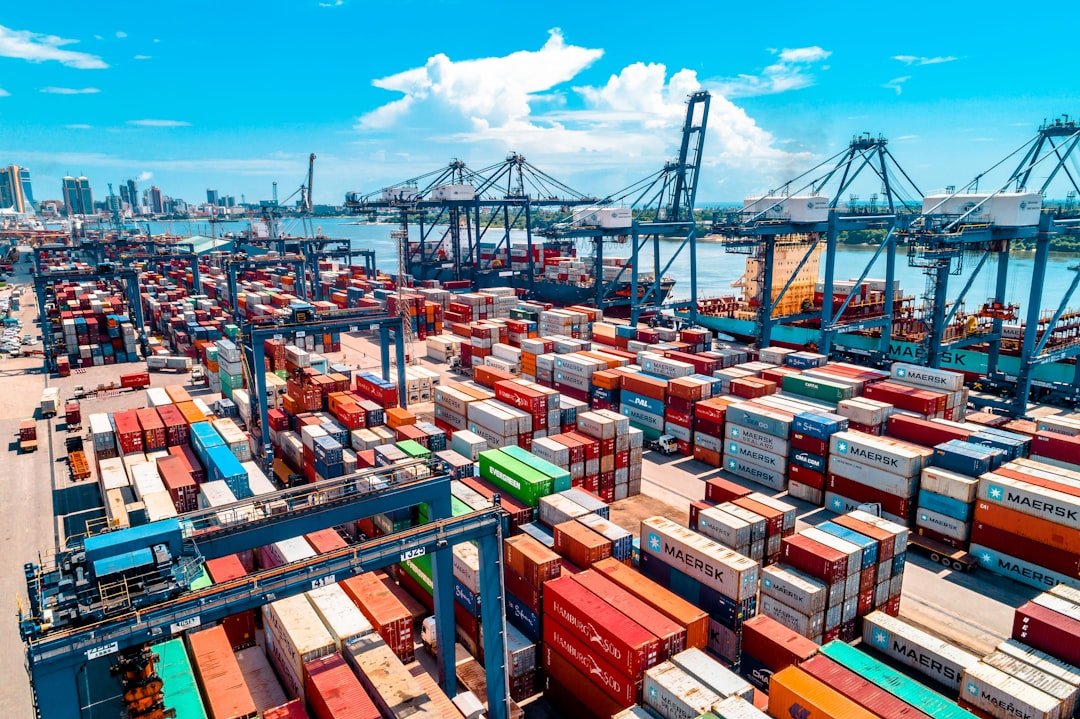
Two container vessels have docked at Gwadar Port so far this year. Last year, there was one. It’s a small number by the standards of any major regional port — but officials say it marks a real shift for a facility that has spent much of the past decade waiting for the ships that were promised to arrive.
Gwadar’s backers argue the port could eventually add $18 billion to $25 billion annually to Pakistan’s economy, part of a broader China-Pakistan Economic Corridor (CPEC) push that has already channeled more than $60 billion in investment into the country. The question now isn’t whether Gwadar matters strategically — it’s whether the port on the ground can handle what its backers say it’s capable of.
Signs of Life: More Ships, More Cargo
Two vessels have called at Gwadar this year, with five more expected, according to port officials. The MV H.M.O Leader brought in 35 units of transshipment cargo, while the MV Riva Glory delivered 14,629 metric tons of commercial cargo — among the more substantial single shipments the port has handled.
“Gwadar offers a unique advantage over other regional hubs due to its land connectivity with Iran and Central Asia,” says Noor-ul-Haq Baloch, Chairman of the Gwadar Port Authority (GPA), who describes the port as “gradually transitioning into active commercial operations.”
The Depth Problem
The obstacle holding Gwadar back is a straightforward one: water depth. The port was designed for a 14-metre draft, but currently operates at roughly 12.5 metres. Standard container vessels — the workhorses of global shipping — typically need 13 to 14 metres to dock safely.
Mohammed A. Rajpar of the Pakistan Ships’ Agents Association put it plainly: “Ships with a draft of 13 to 14 metres, which are standard for major container traffic, cannot dock at Gwadar.” He also pointed to “frequent communication shutdowns and lack of trained local labor” as ongoing sources of uncertainty for operators considering the port.
Until dredging closes that gap, Gwadar is effectively locked out of the container traffic that would justify its billion-dollar price tag.
Capacity on Paper vs. Capacity in Practice
On paper, Gwadar’s infrastructure is substantial:
- Roughly 16,000 TEU (twenty-foot equivalent unit) handling capacity
- More than 90,000 square metres of general cargo storage
- A 2,800-acre free zone, with two industries currently operational and more expected
- Free storage incentives for transshipment cargo, aimed at attracting international shipping lines
That capacity remains largely untested. With only a handful of vessels calling each year, most of Gwadar’s built infrastructure is running well under what it was designed to handle.
Why Gwadar Matters Beyond the Balance Sheet
Gwadar’s case rests on geography as much as economics. The port sits roughly 87 kilometres from the Iranian border, near the mouth of the Strait of Hormuz, with land routes reaching toward landlocked Central Asian markets that currently depend on longer, costlier shipping lanes.
Federal Maritime Minister Muhammad Junaid Anwar Chaudhry has framed that position as strategically valuable amid rising regional shipping risk, describing Gwadar as “emerging as a secure maritime alternative” to routes exposed to Strait of Hormuz disruptions.
What Has to Happen Next
The path from potential to performance runs through a short, well-known list: dredging to reach the designed 14-metre draft, a trained local workforce, more reliable communications infrastructure, and continued policy support to keep shipping lines committed for the long haul. None of it is a surprise to port planners — the challenge has always been execution speed against a $25 billion promise that gets harder to justify the longer it goes unrealized.
FAQ
Why can’t large container ships dock at Gwadar Port yet?
Gwadar currently operates at about a 12.5-metre draft, short of the 13 to 14 metres most standard container vessels require. The port was designed for 14 metres, but dredging hasn’t yet closed that gap.
How much could Gwadar Port contribute to Pakistan’s economy?
Estimates from port and industry officials put the potential annual contribution at $18 billion to $25 billion, as part of the wider $60 billion-plus CPEC investment program.
Is Gwadar Port operational today?
Yes — it is handling commercial and transshipment cargo, including recent shipments from vessels like the MV H.M.O Leader and MV Riva Glory, but at volumes well below its designed capacity.
What is the Gwadar Free Zone?
A roughly 2,800-acre zone attached to the port offering incentives for industry and transshipment operators. Two industries are currently operational, with more expected as infrastructure develops.
Sources: Arab News, The Friday Times.
[…] Gwadar Port handled roughly 200,000 tonnes of transit breakbulk cargo over the past three months, port operator China Overseas Ports Holding Company (COPHC) announced at the Pakistan Logistics & Shipping Summit 2026 held in early August. The figure, disclosed by COPHC chairman Yu Bo, is one of the clearest signs yet that Gwadar’s long-promised role as a regional transit hub is starting to take shape on the ground, even as the port continues to wrestle with the deeper structural problems detailed in our earlier report on Gwadar Port’s development bottlenecks. […]
[…] about how much of that activity converts into durable regional economic benefit — a tension explored in our earlier look at the port’s bottlenecks and reflected in the port’s recent transit cargo […]
[…] the China-Pakistan Economic Corridor (CPEC) are starting to reach the communities living closest to Gwadar Port […]
[…] for port and Free Zone jobs. That labour shortage has already surfaced as a recurring theme in our earlier reporting on the port’s operational bottlenecks, where a shipping-industry official cited a “lack of trained local labor” alongside Gwadar’s […]
[…] as new housing schemes, an international airport and port operations described in our coverage of Gwadar’s port development bottlenecks add to demand on a coastal town that has almost no fresh groundwater of its own. The Rs29 billion […]