Pakistan’s second Minerals Investment Forum closed in Islamabad last week, and the most consequential news out of it had little to do with the stage program. On the sidelines, two mining companies reported fresh copper-gold mineralisation in Balochistan’s Chagai district, extending a resource base that already includes the Reko Diq deposit. And in a meeting with Prime Minister Shehbaz Sharif, a delegation from Barrick Mining Corporation said it wants to invest in building mineral-processing industries not just in Karachi, but in Gwadar as well — a city that, for CPEC’s first decade, has mostly waited for industrial tenants rather than hosted them.
Two Fresh Discoveries at the Forum
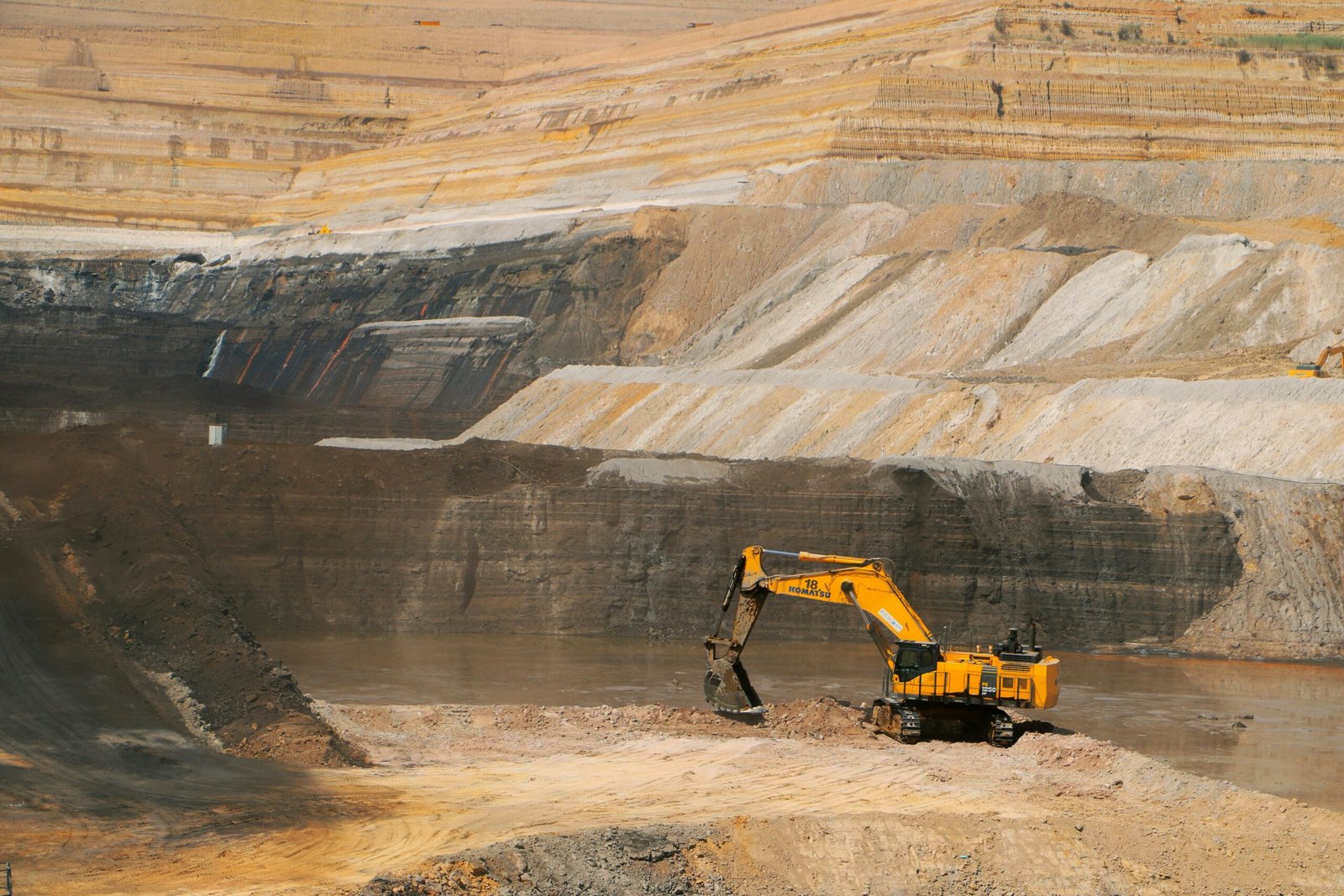
National Resources Limited, a joint venture backed by Fatima Fertilizer, Liberty Mills and Lucky Cement, told the forum it has identified copper and gold mineralisation across at least eight porphyry targets in Chagai, after nearly 25,000 metres of drilling. The company’s chairman, Muhammad Ali Tabba, said one drill hole returned 295 continuous metres grading 0.43 percent copper and 0.13 grams per tonne of gold, including a higher-grade interval within it. The new discoveries span roughly 5.6 square kilometres at a site called Darigwan, next to the company’s earlier Tang Kaur find.
Separately, Mari Energies Limited told the Pakistan Stock Exchange that its subsidiary, Mari Minerals, had confirmed a new porphyry copper discovery at its East Siah Diq exploration target, also in Chagai. Drilling there found copper-style mineralisation beginning around 100 metres below the surface, across an area of about 1.4 square kilometres, with a second phase of lab results expected in early 2027. Neither company has yet published a formal resource estimate for its new find, and both are still years away from any construction decision — but the results reinforce what officials have said for years: Chagai’s mineral wealth is not confined to the single, long-delayed Reko Diq project.
Barrick’s Pitch to the Prime Minister
The more immediately relevant development for Gwadar came out of a separate meeting on the forum’s sidelines. A Barrick delegation led by company chairman John Thornton met Sharif in Islamabad, where, according to an official readout from Radio Pakistan, the Prime Minister asked to draw on Barrick’s expertise for Pakistan’s mineral sector beyond Reko Diq itself, and the two sides discussed the policy, regulatory and infrastructure frameworks the sector still needs. The readout states that the Barrick delegation “expressed keen interest in investing in the establishment of mineral processing industries in Karachi and Gwadar” — the first time the company has publicly named Gwadar, specifically, as a site for downstream industrial investment rather than purely as a shipping corridor.
No agreement was signed, and no location, scale or timeline was announced. But the distinction matters: Reko Diq’s current export plan routes copper concentrate by rail to Karachi, where Pakistan International Bulk Terminal has a port-access agreement with Reko Diq Mining Company to ship it abroad, starting in 2028, for processing in foreign smelters. A processing plant actually built in Pakistan — let alone in Gwadar — would be a different proposition entirely.

Why “Processing,” Not Just Extraction, Matters
Pakistan currently has little capacity to smelt or refine the copper and gold its mines are starting to produce, which means the country exports raw or lightly concentrated ore and imports back the finished metal products built from it elsewhere. Industry figures have argued for over a year that this gap is the sector’s real missing piece. Shamsuddin Shaikh, chief executive of National Resources Limited, has said that domestically refined copper would let Pakistan build downstream industries of its own — wiring, automotive components, manufacturing inputs — rather than simply shipping value overseas with the ore.
That is the context in which Barrick’s interest in Gwadar lands differently than a routine investment courtesy. Last week’s coverage of the forum’s opening noted that organisers had paired the mining pitch with a logistics theme built around Gwadar Port, but described the port’s role only as a discussion topic, with no shipping agreement attached. A processing plant is a step further than logistics: it would mean building, operating and staffing an industrial facility in the city itself, not routing cargo through it.

A Possible Second Life for Gwadar’s Free Zone
The timing is notable given this site’s recent reporting on the Gwadar Free Zone’s own investment gap, where a Chinese manufacturing tenant came close to shutting down earlier this year, exposing how thin industrial activity still is even on concessional terms. The Free Zone, and the port behind it, have spare capacity to offer: a research paper covered on this site last week found Gwadar Port running at under 1 percent of its designed throughput. A mineral-processing plant would be exactly the kind of large, anchor industrial tenant the zone has lacked, and it would give Gwadar’s underused berths something concrete to ship besides container traffic.
It would also mean jobs tied to an industry with a multi-decade horizon rather than relief schemes or one-off grants — the kind of durable local employment that has been largely absent from Gwadar’s port and free-zone development so far.
The Caveats Nobody Is Glossing Over
None of this is close to committed. Barrick’s own larger project, Reko Diq, has already slipped toward a possible 2030 start after the company extended its review of the mine’s construction timeline, citing security conditions in Balochistan and the wider region as a factor. Pakistan’s state minerals push has repeatedly paired ambitious announcements with slow on-the-ground delivery, a pattern this site has traced through the Free Zone’s stalled tenancies and the port’s low cargo volumes alike. An expression of “keen interest” from a visiting delegation is not a site-selection decision, a financing commitment or a construction permit, and the same security concerns that have slowed Reko Diq would apply just as directly to any processing plant Barrick might eventually build in Gwadar.
What is different this time is the specificity: Barrick did not describe an interest in “Pakistan’s mineral sector” in the abstract, or in logistics support generically. It named Gwadar, by name, as a place it wants to put an industrial facility. Whether that survives the gap between a Prime Minister’s meeting and a signed agreement is, as with so much of Gwadar’s development story, a question for the next announcement rather than this one.
FAQ
What did Barrick Mining say about investing in Gwadar?
A Barrick delegation led by chairman John Thornton told Prime Minister Shehbaz Sharif it was interested in investing in mineral-processing industries in both Karachi and Gwadar, according to an official government readout of their November 13 meeting. No agreement, location or timeline has been announced.
What new mineral discoveries were reported in Chagai?
National Resources Limited reported copper-gold mineralisation across at least eight porphyry targets near its existing Tang Kaur site, while Mari Energies reported a new porphyry copper discovery at its East Siah Diq target. Both are separate from, and in addition to, the long-running Reko Diq project.
Is Reko Diq’s copper currently processed in Pakistan?
No. Reko Diq’s current export plan moves copper concentrate by rail to Karachi, where it is shipped abroad for processing starting in 2028 under an agreement with Pakistan International Bulk Terminal. Pakistan does not yet have domestic smelting capacity for this material.
Sources: Radio Pakistan, “PM seeks Barrick’s expertise for development of mineral sector”; Daily Times, “Copper, gold deposits identified at eight sites in Chagai” and “Barrick Mining signals interest in mineral processing industries in Karachi, Gwadar”; ARY News, “Mari Energies announces copper-gold discovery in Balochistan’s Chagai”; BOL News, “Mari Energies report copper-gold finds in Chagai”; The Express Tribune, “Mining gains traction despite Reko Diq delays”; Arab News Pakistan, “Chinese, Pakistani firms join Barrick in mining push as Reko Diq exports near”; Gwadar Post’s earlier coverage of the Gwadar Free Zone, Gwadar Port’s capacity utilisation, and the Pakistan Minerals Investment Forum.