Gwadar Port made local headlines in April when it took its first dedicated transhipment vessel call, a milestone officials cited as proof the deep-sea port’s moment had finally arrived. A new policy paper from the Pakistan Institute of Development Economics (PIDE) puts that milestone in a harder light: even after the surge, Gwadar’s bulk terminal is handling roughly 34,000 tonnes a year against a design capacity of 11 million tonnes — by the paper’s own capacity-derived measure, about 0.3% utilisation, or 5–10% by an independent estimate using a different method.

A Milestone Dwarfed by Installed Capacity
The paper, Policy Viewpoint No. 72:2026, titled “Winning Transhipment: A Roadmap to Make Gwadar a Preferred Hub for Global Shipping Lines,” was written by Mujtaba Arshad, a research associate at PIDE’s Centre of Excellence for CPEC. It traces this year’s traffic surge to the Strait of Hormuz disruption following military escalation between the United States, Israel and Iran in early 2026. Roughly a fifth of the world’s seaborne oil and LNG passes through the strait, and when war-risk insurance premiums spiked, shipping lines temporarily rerouted cargo to Karachi, Port Qasim and, for the first time, Gwadar.
Karachi Port absorbed most of the diverted volume, handling more transhipment containers in March 2026 alone than in all of 2025. Gwadar’s share was smaller but symbolically significant: its first dedicated transhipment call. Separate reporting cited in the paper notes the port processed around 11,000 containers in April 2026, up from roughly 8,300 for the whole of the prior year — a sharp jump, even if it still represents a small fraction of regional traffic.
The paper’s comparative table puts that traffic in context. On a pre-2026 baseline, Gwadar logged 22 annual vessel calls, against 1,600 for Karachi Port, 1,535 for Port Qasim, 4,310 for Colombo and 4,807 for Oman’s Sohar port. Berth utilisation tells a similar story: Karachi runs at 44–52% of its 125-million-tonne capacity and Port Qasim at roughly 65% of its 89-million-tonne capacity, while Gwadar’s 11-million-tonne bulk terminal remains, in the paper’s words, critically underused.
Why the Port Still Sits Idle
The paper argues the shortfall is not primarily about infrastructure — Gwadar already has a deep-sea berth, a bulk terminal and a Special Economic Zone meant to generate industrial cargo. It points instead to three structural gaps: no rail connection to the national network, which makes inland transport through Gwadar markedly more expensive than routing cargo via Karachi; limited industrial activity inside the Free Zone, which generates little cargo of its own; and weak integration into global liner networks, with few scheduled international shipping services calling at the port.
Those constraints, the paper argues, explain why Gwadar’s recent gains are likely to prove temporary. Shipping lines choose hub ports on commercial fundamentals — price, turnaround time, berth reliability, cargo availability and service frequency — not on geography or a passing crisis. Citing the experience of Colombo, Jebel Ali and Salalah, the paper notes those hubs succeeded through integrated logistics ecosystems built over years, not a single favourable shipping season. Once Gulf shipping conditions normalise, it warns, diverted cargo is likely to drift back to the ports carriers already trust.
The Price Problem

One recommendation gets detailed fiscal treatment: a time-bound, roughly 50% discount on Gwadar’s port dues, designed to undercut regional rivals without simply pulling existing cargo away from Karachi. Citing a Senate Standing Committee report, the paper notes Gwadar Port Authority (GPA) currently charges $15,000 in port dues for a 50,000-gross-tonnage vessel call, close to Port Qasim’s $15,000 and below Karachi Port Trust’s $18,900. A 50% discount would cut that to $7,500 per call — which, applied to Gwadar’s 22-call baseline, would need roughly 22 additional calls a year, or 44 calls in total, before the discounted rate’s dues revenue matched what the port collects today.
The paper flags one structural catch: under Gwadar’s 40-year build-operate-transfer concession with China Overseas Ports Holding Company, terminal handling revenue is split 91% to the Chinese operator and 9% to GPA, while port dues are collected directly by GPA and fall outside that split. It recommends structuring any discount specifically against port dues, where Pakistan keeps the full benefit, rather than against COPHC-operated terminal charges.
Betting on Fishing and Minerals to Fill the Gap
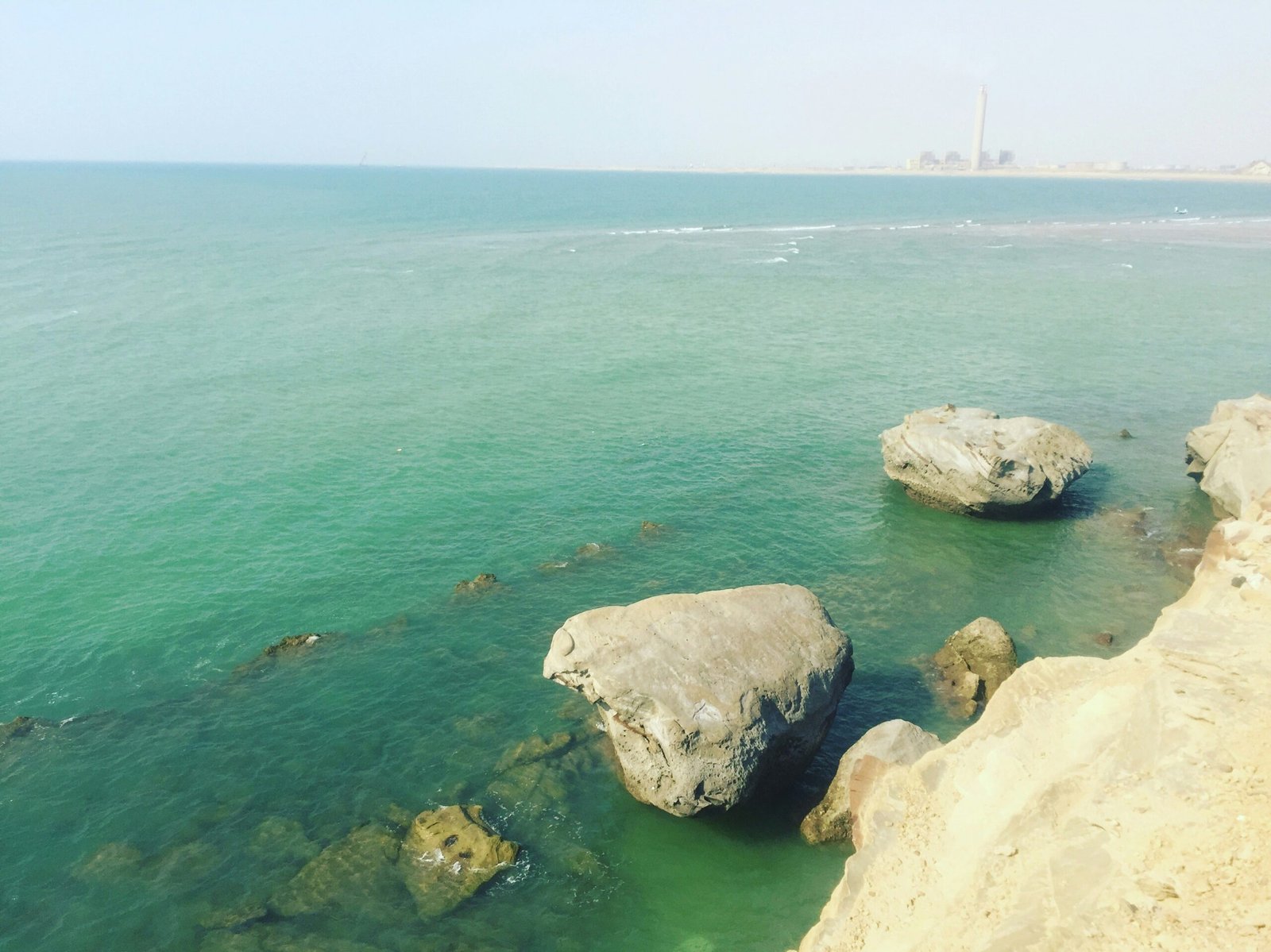
Beyond pricing and scheduling reforms, the paper argues Gwadar needs a steady cargo base of its own, and points to two sources: fisheries and minerals. Roughly 80% of Gwadar’s population depends on fishing, and national seafood exports reached $253.24 million in the first half of FY2025–26, up 22% year-on-year. The paper estimates Balochistan’s annual catch potential, with adequate processing infrastructure, at 300,000 tonnes worth around $645 million in exports — well above the 2,000-tonne cold-storage capacity currently available in Gwadar’s South Free Zone. It recommends channelling investment through fishing cooperatives rather than corporate displacement, framing local inclusion as a commercial necessity rather than only a social one.

Minerals are the longer-term anchor the paper points to. Balochistan’s mineral reserves are estimated at roughly $8 trillion, with the Reko Diq copper-gold project alone projected to generate around $2.7 billion a year in Phase 1 exports once production begins. But that cargo is currently contracted to Port Qasim’s bulk terminal, not Gwadar, and will likely stay there until the proposed Chagai-Gwadar railway — whose feasibility study is complete but whose financing remains under discussion with Gulf states — is actually built. The paper recommends Islamabad formally designate Gwadar as the primary, not residual, mineral export gateway once that link exists, alongside a planned copper smelter that would let Pakistan export refined metal rather than raw concentrate. The capacity question that would need to absorb that traffic is one Gwadar Port Authority has itself flagged in recent master-plan reviews, and it is the same logistics link organizers highlighted at this month’s Minerals Investment Forum in Islamabad.
What Comes Next
The paper sets out nine sequenced recommendations in total, among them a dedicated Gwadar Transhipment Authority to coordinate customs, port operations and shipping-line engagement; a national Port Community System piloted jointly with Karachi to speed up Gwadar’s currently paper-based customs process; and direct negotiations with major liner operators — MSC, Maersk, CMA CGM, Hapag-Lloyd and COSCO — for volume-linked hub agreements offering guaranteed berth access in exchange for minimum cargo commitments. It also calls for turning an existing November 2025 directive diverting sugar imports from Port Qasim to Gwadar into a standing, published quota covering additional bulk commodities such as wheat and cement.
The paper’s final recommendation is arguably its most cautious: before committing major capital on the strength of this year’s numbers, it urges an independent assessment of how much of the 2026 surge is durable versus a temporary by-product of the Hormuz disruption. That caution echoes a broader theme running through recent coverage of the port, from the operational limits still facing its largest vessel calls to the province’s own pitch to Beijing for a bigger regional role. Pakistan’s port system, the paper concludes, has been handed a rare second look from international carriers; whether that look becomes a lasting commitment will be decided less by this year’s traffic numbers than by whether the structural reforms behind them actually get built.
Sources: Mujtaba Arshad, “Winning Transhipment: A Roadmap to Make Gwadar a Preferred Hub for Global Shipping Lines,” PIDE Policy Viewpoint No. 72:2026, Centre of Excellence for CPEC, Pakistan Institute of Development Economics; Asia Times, “Gwadar’s Moment Has Finally Arrived for Pakistan,” May 2026.