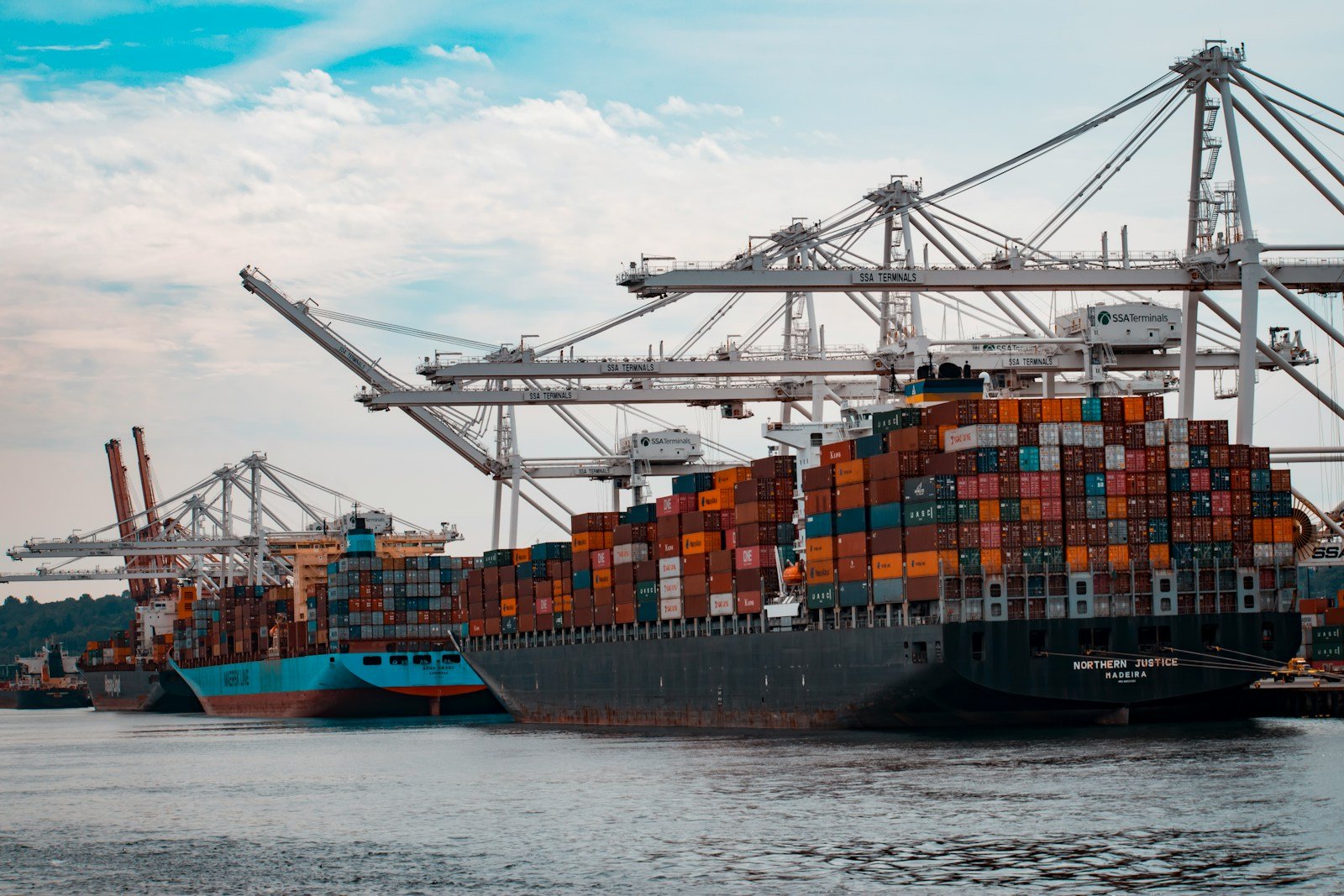
Pakistan’s China-Pakistan Economic Corridor has entered what officials and analysts are now calling its second phase — a shift from building roads, power plants and port berths to making that infrastructure pay off in trade and jobs. Gwadar Port, the deep-water facility on Balochistan’s coast that anchored CPEC’s first decade, sits at the centre of this transition, featuring in a fresh round of government reviews, new port-modernisation policy, and updated investment figures released this month.
Steering committee fast-tracks CPEC 2.0 corridors
On August 6, 2026, Federal Planning Minister Ahsan Iqbal chaired the 91st CPEC Projects Review and National Steering Committee meeting in Islamabad, directing ministries to accelerate work across CPEC 2.0’s five declared corridors: Growth, Livelihood, Innovation, Green Development, and Regional Connectivity (The Nation).
Among the items reviewed was the Power Supply Stability Project for Gwadar Port and its Free Zone, a long-standing pain point for the port given the city’s history of electricity shortfalls. The minister also flagged delays in the Karachi Coastal Comprehensive Development Zone, ordering stakeholders to file their observations within a week, and pressed for financing arrangements on the Karakoram Highway Phase-II project to be settled at a Joint Working Group meeting by the end of August, ahead of a 2028 completion target.
A separate initiative reviewed at the meeting — training 1,000 Pakistani agriculture graduates in China — was described by Iqbal as needing to translate into real capacity for Pakistan’s farm sector, with an emphasis on biotechnology, seed development and digital extension services, rather than remaining a credential-only exercise. His broader message to participating ministries was blunt: memorandums of understanding “must translate into timely implementation” rather than stay confined to paperwork.
The investment tally: $25.9 billion and counting
Days earlier, on August 12, Chinese Ambassador to Pakistan Jiang Zedong laid out CPEC’s cumulative scorecard at a briefing hosted jointly by the Chinese Embassy and the Institute of Regional Studies. He put direct investment attracted through the corridor at $25.9 billion, with more than 260,000 jobs created, over 8,000 megawatts of power generation capacity added, 510 kilometres of highways built, and 886 kilometres of power transmission infrastructure completed (24NewsHD).
Ambassador Jiang pointed to the Faisalabad Industrial Park as an example of the model Islamabad and Beijing now want to replicate elsewhere, including in Gwadar’s own Free Zone: 39 Chinese companies operate there, with five ceramics firms alone generating roughly $20 million in annual tax revenue while employing more than 5,000 local workers. He described CPEC as needing to deliver “greater benefits to the people of both countries” going forward, framing the next stage around what he called a people-centred development approach.
Why infrastructure alone hasn’t meant trade
Not every recent assessment has been celebratory. In an August 16 analysis for The Friday Times, Mujtaba Arshad of the Pakistan Institute of Development Economics’ Centre of Excellence for CPEC argued that the corridor’s first phase built real assets — motorways, power plants, and Gwadar Port itself — without a matching rise in Pakistan’s export performance (The Friday Times).
He noted that Pakistan’s export-to-GDP ratio fell from 15.4 percent in 1999 to just 10.4 percent by 2024, and that the country’s ranking on the World Bank’s Logistics Performance Index slid from 68th in 2016 to 122nd by 2018, with insufficient data available for a 2023 score. His argument: “roads and ports create the potential for trade. They do not create trade itself.” Closing that gap, he wrote, requires institutional reforms — a genuine shift of freight from road to rail and dry ports, risk-based customs inspection, Special Economic Zones that operate on enforced timelines rather than announcements, and a single coordinating body spanning federal and provincial agencies — pointing to Shenzhen, Vietnam, Thailand, Kazakhstan and Georgia as comparative models.
That critique lands directly on Gwadar, whose transit-cargo volumes have been rising even as questions persist about how much of that activity converts into durable regional economic benefit — a tension explored in our earlier look at the port’s bottlenecks and reflected in the port’s recent transit cargo figures.
Gwadar’s place in a wider ports push
The commerce-focused shift extends beyond CPEC’s own committees. A Radio Pakistan report on August 27 detailed a Prime Minister’s Task Force on Maritime Reforms now upgrading three ports simultaneously — Karachi Port, Port Qasim, and Gwadar Port — deepening navigation channels to accommodate larger vessels and modernising harbour equipment and cargo-handling facilities (Radio Pakistan).
The reforms also introduce a Port Community System, web-based and faceless customs processing, real-time container tracking, and round-the-clock customs availability, alongside a new Shipping Policy 2026 and Transshipment Policy intended to draw private investment into shipping, shipbuilding and ship-repair. For Gwadar specifically, these measures are aimed at the same operational friction — customs delays, limited connecting infrastructure, inconsistent power supply — that has kept the port from running at the volumes its deep-water capacity was designed for.
What comes next
Taken together, August’s developments describe a CPEC that Islamabad and Beijing are trying to reorient around measurable commercial outcomes rather than construction milestones alone. For Gwadar, that means the coming months should show whether the Power Supply Stability Project, the Free Zone’s push to attract manufacturers on the Faisalabad Industrial Park model, and the Maritime Reforms Task Force’s customs and channel-depth upgrades actually convert into higher, steadier cargo throughput and local employment — rather than the periodic activity spikes the port has seen before.
Whether CPEC’s second phase closes the gap between infrastructure and trade that critics like Arshad have identified will likely be the central test of Gwadar’s development story through the rest of 2026.
FAQ
What is CPEC 2.0?
CPEC 2.0 refers to the current, second phase of the China-Pakistan Economic Corridor, which shifts emphasis from large-scale infrastructure construction toward industrial cooperation, trade facilitation and institutional reform across five designated corridors: Growth, Livelihood, Innovation, Green Development, and Regional Connectivity.
How much has CPEC invested in Pakistan so far?
According to Chinese Ambassador Jiang Zedong, CPEC has attracted $25.9 billion in direct investment as of August 2026, creating more than 260,000 jobs and adding over 8,000 megawatts of power generation capacity.
What is the Gwadar Power Supply Stability Project?
It is a CPEC-linked initiative reviewed at the August 6, 2026 steering committee meeting, aimed at resolving Gwadar Port and its Free Zone’s long-running electricity supply problems, which have been cited as a barrier to the port and zone attracting sustained industrial investment.
Which ports are being upgraded under Pakistan’s Maritime Reforms Task Force?
The task force, under the Prime Minister’s office, is simultaneously upgrading Karachi Port, Port Qasim, and Gwadar Port — deepening channels, modernising cargo facilities, and introducing digital customs systems alongside a new Shipping Policy 2026.