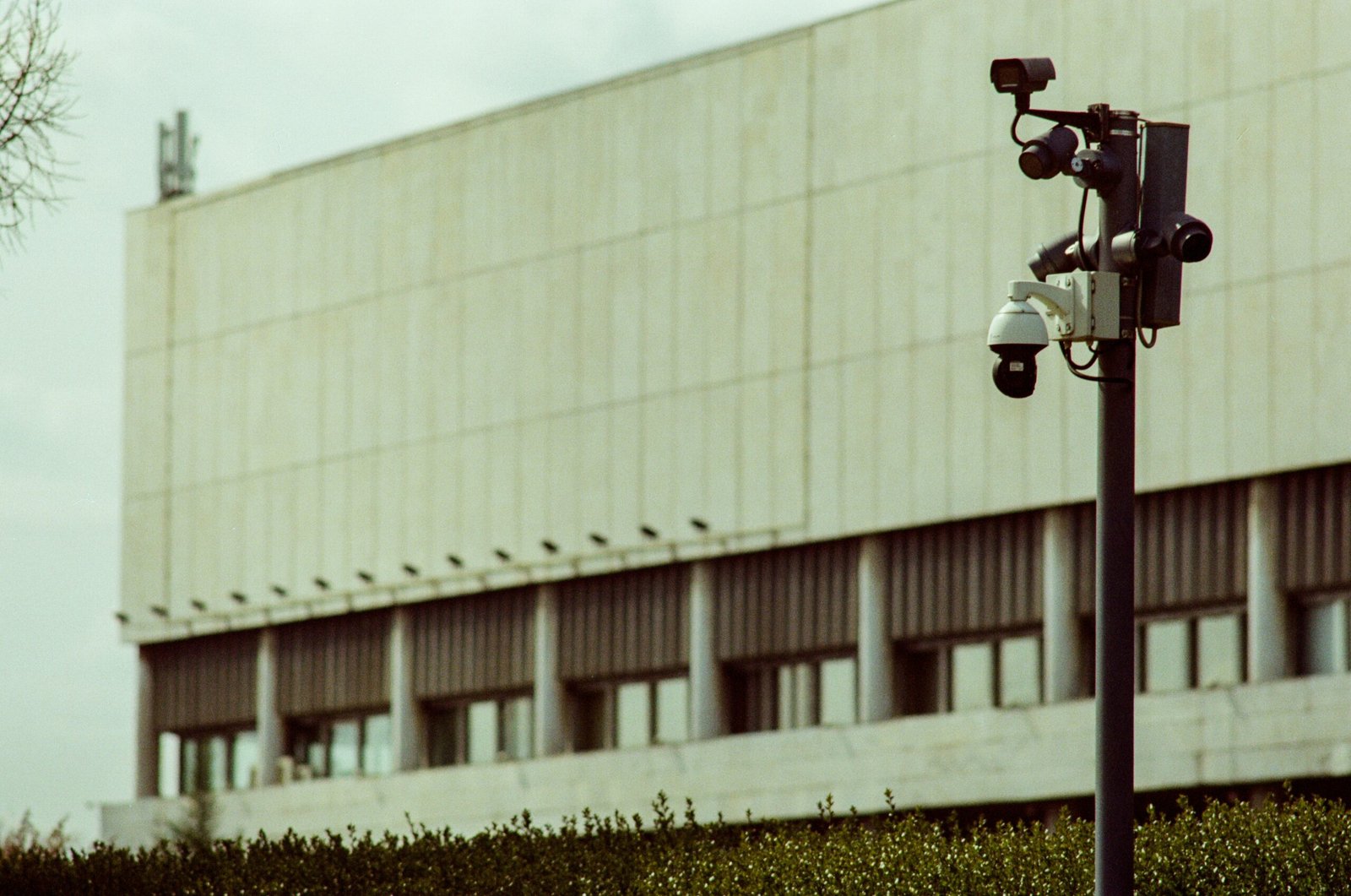
GWADAR — A citywide surveillance network meant to put cameras across Gwadar’s streets, port facilities and public buildings is still not finished, nine years after it was first approved. The Gwadar Safe City Project’s underground cabling and camera poles are now largely in place, officials said this month, but the cameras themselves — the part residents and businesses were promised would deter crime and reassure investors — have yet to go up.
The delay is not new. The project has been revised twice, missed at least one formal deadline already, and now carries a price tag more than two-and-a-half times its original estimate.
A Decade in the Making
The Government of Balochistan first submitted the Gwadar Safe City (Phase-I) PC-I in 2015, pricing it at Rs10.752 billion. Pakistan’s Central Development Working Party (CDWP) approved a scaled-down version in 2016 at Rs2,951.778 million, with a 36-month construction window that would have finished the project by June 2019 and split the cost evenly between the federal and Balochistan governments.
That deadline came and went. In 2023, the CDWP approved a revised PC-I worth Rs4,966.905 million and pushed completion to June 2024. That date also slipped. A second revision in April 2025 raised the approved cost again, to Rs7,486.786 million, with the federal government now covering 33.17 percent of the bill and Balochistan the remaining 66.83 percent, and a new completion deadline of June 2027.
Four months later, in August 2025, the project’s sponsoring agency asked to move that deadline up instead, to June 2026, with Balochistan assuring the CDWP it could finish by June 30 of that year. The CDWP approved extra one-time funding — up to 25 percent of the added cost — tied to the province meeting that date. According to a report by The Nation in July 2026, that June 2026 deadline has also been missed, and officials expect the government will set yet another one, though no new date has been announced.
The project sits within the broader planning framework Balochistan has built around Gwadar’s growth, including the Smart Port City Master Plan that GwadarPost covered last week, which likewise groups municipal-scale infrastructure — water, housing, drainage — under a single development umbrella still working through its own funding and timeline questions.
What the Cameras Are Supposed to Watch
As approved, the Safe City Project covers an estimated 150 square kilometres across Gwadar, according to The Nation‘s reporting. Earlier project documentation described a wide net of coverage: government buildings, roads and neighbourhoods, the airport, bus stands, parking areas, schools and health centres, all feeding into a Command and Control Centre built along lines similar to the Safe City systems already running in Islamabad and Lahore.
A related but separate security layer — a Perimetric Security System costing roughly Rs252.35 million — is designed specifically to cover Gwadar Port, the Gwadar Port Authority’s own buildings, and the Free Zone’s north and south sections, detecting threats and flagging suspicious activity around the port infrastructure that sits at the centre of CPEC’s investment in the city.
Officials have framed the combined system in economic terms as much as security ones. Gwadar Development Authority Director General Moin-ur-Rehman Khan said last year that “Gwadar represents Pakistan’s economic future and is emerging as an important centre for global investment” — a line that reflects how closely the province has tied surveillance infrastructure to its pitch for outside investment, tourism and commercial activity.
Cables and Poles Are Up. Cameras Are the Next Test.
By August 2026, the Balochistan government had finished laying underground cabling and installing poles for the security cameras at what officials described only as “important, sensitive and busy locations” across the city, with GDA Director General Khan directing departments to speed up the remaining work. The Daily CPEC reported in mid-October that additional towers and poles for the camera network had since gone up at key sites, with officials saying the central command complex and control centre are still under construction and that the system will not go live until that work is finished.
That sequencing — physical infrastructure first, cameras and control room last — mirrors how Pakistan’s other Safe City projects have rolled out, though Gwadar is running well behind the rest. Islamabad’s system, launched in 2016, was the country’s first major deployment and now runs thousands of cameras with number-plate and facial recognition. Lahore’s network has grown to more than 8,000 HD cameras tied into 4G LTE connectivity and a command centre run by the Punjab Safe Cities Authority (PSCA), which also provided technical guidance to Gwadar’s project under a 2022 memorandum of understanding. Karachi’s and Peshawar’s equivalents remain partially built, while Quetta’s was initiated specifically to address urban crime and terrorism. Of all of them, Gwadar’s has taken the longest to move from approval toward an operating system.
Why Gwadar Keeps Missing Its Own Deadlines
Neither the CDWP’s approval records nor subsequent reporting have offered a detailed public account of what has gone wrong at each stage. The Nation‘s July 2026 report, citing an unnamed official source, pointed to procurement challenges, the absence of dedicated project directors, and gaps in the technical competencies needed to execute a project of this scale — generic but recurring problems in Pakistani public infrastructure delivery rather than anything specific to Gwadar.
The numbers tell their own story regardless of cause. Comparing the CDWP’s original 2016 approval with its April 2025 revision shows the approved cost rising by roughly 154 percent in nine years, even before accounting for whatever additional funding the missed June 2026 deadline will require. That compounding cost has tracked a city whose population and investment ambitions have grown just as fast: GwadarPost has separately reported this month on the promotion of nearly 200 Gwadar police constables, a reminder that law-enforcement capacity in the city is being built up through more than one channel at once, on more than one timeline.
Security and trade officials elsewhere in Gwadar have separately pointed to the city’s security environment as a factor that makes outside investors and airlines cautious — commentary GwadarPost noted in its recent coverage of New Gwadar International Airport’s thin flight schedule — which gives the Safe City Project’s own delay a certain irony: the system meant to help reassure investors about security has itself become an example of the execution gaps those same investors watch for.
What to Watch Next
With the underground cabling finished and camera poles going up, the project has moved past the infrastructure stage that stalled it for years. What happens next is less certain. No official has publicly set a new completion date since the June 2026 target lapsed, and neither the camera installation timeline nor the Command and Control Centre’s construction schedule has been made public. For a city whose other mega-projects — the port, the airport, the Free Zone — have tended to arrive ahead of the services meant to support them, Gwadar’s Safe City Project has run in the opposite direction: the cameras that were supposed to help secure the city’s growth are still the one piece missing, nine years after the plan was first approved.
Sources
This report draws on The Nation’s July 2026 coverage of the Gwadar Safe City Project’s cost overruns and missed deadlines, Gwadar Pro’s reporting (via Lead Pakistan and INP) on the completion of underground cabling and camera poles, TechJuice’s coverage of the April 2025 revised PC-I approval, and The Daily CPEC’s October 2026 report on additional camera towers and poles, alongside GwadarPost’s own prior reporting on Gwadar’s Smart Port City Master Plan, local police recruitment and the New Gwadar International Airport, linked throughout this article.